
At What Age Should Kids Get Their First Eye Exam? A Parent’s Guide
At What Age Should Kids Get Their First Eye Exam? A Parent’s Guide
As a parent, you watch every milestone—first steps, first words, the day your child starts school. But one milestone often gets overlooked: your child’s first eye exam for kids.
Your child’s vision plays a major role in how they learn, grow, and interact with the world. The challenge? Many eye problems go unnoticed because young children don’t always realize something is wrong.
So, when should kids get eye exams? Let’s break it down clearly.
Why Early Eye Exams Matter
Your child’s eye health begins developing early—within the first few months of age. During this time, the brain is forming critical connections based on what the eyes see.
If there’s a vision issue—like blurry vision, poor eye alignment, or an undiagnosed eye condition—it can impact development long-term.
Early comprehensive eye exam visits help detect:
- Refractive errors like nearsightedness or farsightedness
- Eye strain from focusing issues
- Misalignment such as crossed eyes or an eye turn
- Conditions like amblyopia (lazy eye)
Many of these issues are far easier to treat when caught early.
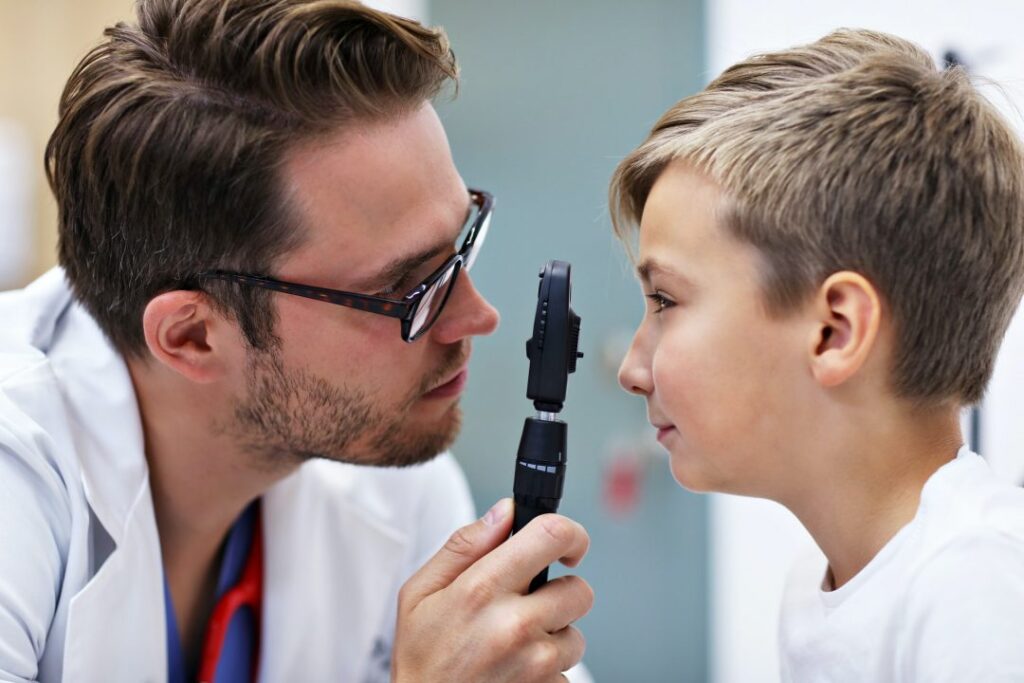
When Should Kids Get Their First Eye Exam?
Understanding the right pediatric eye exam age is key.
Eye specialists recommend that children have their first child’s eye exam between 6 to 12 months of age.
Here’s a simple timeline:
6–12 Months of Age
Your baby’s first comprehensive eye exam checks:
- Basic eye health
- Early eye problems
- Proper eye alignment and tracking
3–5 Years (Young Children)
Before your child starts school, their eyes should be tested again to evaluate:
- Visual clarity
- Depth perception
- Coordination and focus
School-Aged Children
Once your child starts school, regular exams become critical.
For school-aged children, experts recommend:
- Eyes tested every 1–2 years
More frequent visits if a vision issue is detected
Signs Your Child May Need an Eye Exam Sooner
Even before scheduled checkups, your child may show signs of a developing eye condition.
Watch for:
- Frequent squinting
- Complaints of eye strain or headaches
- Sitting too close to screens
- Difficulty focusing
- One eye drifting (eye turn)
- Visible crossed eyes
- Short attention span during reading
If you notice any of these, it’s time to schedule an eye exam.
What Happens During a Pediatric Eye Exam?
A child’s eye exam is designed specifically for kids—simple, quick, and stress-free.
During a comprehensive eye exam, the doctor will:
- Evaluate how the eyes move and focus
- Check for refractive errors
- Assess eye alignment and coordination
- Examine overall eye health
Even infants and young children can have their eyes tested effectively.
Common Vision Problems in Children
Several eye problems can develop early in life, including:
- Myopia (Nearsightedness)
- Hyperopia (Farsightedness)
- Astigmatism
- Amblyopia (lazy eye)
- Strabismus (crossed eyes)
Left untreated, these conditions can affect learning and confidence.
How Eye Exams Support Your Child’s Success
Here’s the reality:
A large portion of learning depends on vision.
If your child is struggling with an undiagnosed vision issue, it can impact:
- Reading ability
- Focus and comprehension
- Classroom performance
- Confidence
Routine exams ensure your child’s vision supports their growth—not holds it back.
How to Prepare Your Child for Their First Eye Exam
Make the experience easy:
- Keep it positive and simple
- Schedule when your child is rested
- Bring comfort items for younger kids
- Stay calm—your child will follow your lead
The goal is to make every child’s eye exam feel normal and stress-free.
Final Thoughts: Don’t Wait on Your Child’s Vision
Your child may not realize they have a problem—but their future depends on clear vision.
Knowing when should kids get eye exams can make all the difference.
Early detection protects your child’s:
- Learning
- Development
- Confidence
If your child hasn’t had their first comprehensive eye exam, now is the time.
Schedule an Eye Exam Today
At Children’s Eye Center, we specialize in pediatric care and understand the importance of early detection.
Our team provides:
- Expert care for infants and young children
- Thorough comprehensive eye exams
- A comfortable, child-friendly environment